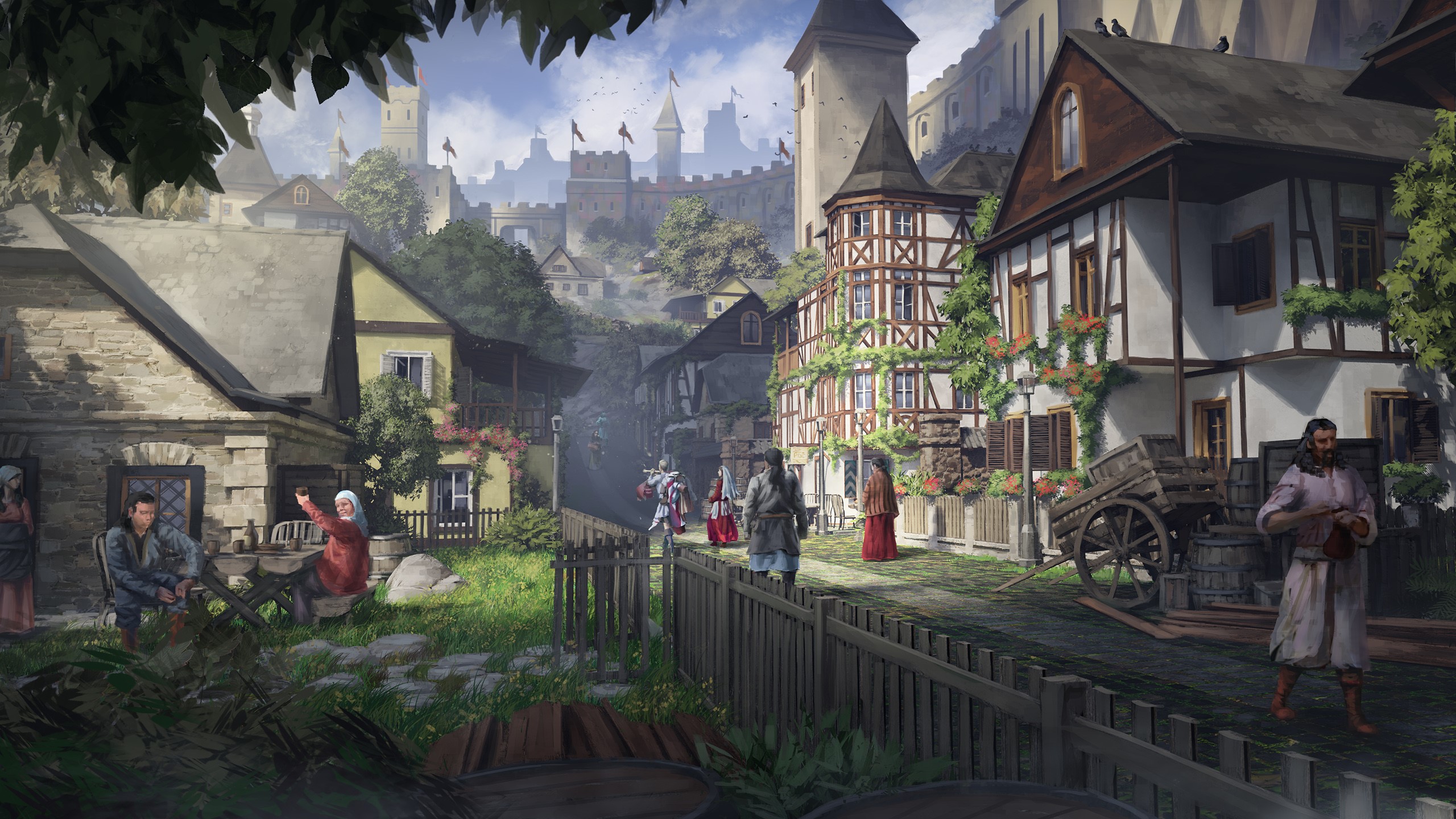
The Importance of Merchants and the Middle Class
In a series of lectures presented during the early 20th century, Belgian historian Henry Pirenne put forth his understanding of the development of cities in Medieval Europe, an understanding based upon the decline and subsequent rise of commercial activity. Pirenne maintained that between the ninth and tenth centuries, the only real trade occurring in Europe was at a local level, long distance commerce having all but disappeared as a result of Muslim domination in the Mediterranean. He believed that at this point in time the only European settlements not purely agricultural were those of the ruling noble classes or those of the Church. Feudal estates, monasteries, castles, and fortresses dominated the European landscape, but none of these could be labeled as towns or cities. As Pirenne explains, “the cities which were then to be found were without two of the fundamental attributes of the cities of the Middle Ages and of modern times- a middle-class population and a communal organization.“1 Towards the end of the tenth and into the eleventh century, this budding middle class began to form, Pirenne argues, in direct correlation with the expansion of trade, and with that formation, communal organization and social progress soon followed.
As Islamic control in the Mediterranean faded, and as Scandinavian traders in the north became more prevalent, true medieval towns began to develop throughout Europe. The expansion of trade paralleled a decrease in the power of feudal lords as these merchant suburbanites, living outside the walls and control of the feudal establishments, began to organize their own communal establishments, constantly growing in number and influence. Alongside those merchants devoted solely to trade, skilled workers began to spring up in these suburban communities as well, artisans making a living off a particular craft. These social units would be the driving force in the evolution of medieval cities.
Supporting Pirenne’s claims of the significance of trade and the resulting middle class, primary resources illustrate these points. Looking at the town charter of Saint Omer issued by Count William Clito of Flanders in 1127, there is clear evidence to support Pirenne’s notions of the prevalence of merchant life. The 5th provision states: “All who have their guild and belong to it… I declare to be free from toll at the gates of Dixmude and Gravelines, and I make them free from sewerp throughout Flanders.” This clearly demonstrates that there was a notable presence of artisans in Count William’s territory and that William recognized their importance. By clearing them of the burden presented in tolls, William encourages them in the practice of their business, and one can see further encouragement in the two succeeding provisions. The 6th states, “Whoever goes to the emperor’s land on business shall not be forced to pay hanse fee by any of my people,” and the 7th, “If it should at any time happen that I conquer any land outside Flanders…I shall see that [the men of Saint Omer] are free from every custom and every toll in the conquered territory…” Again, it is clear that Count William is very concerned with his local merchants, spurring them on in their business dealings, conveying that no dues will be imposed on them for traveling outside his jurisdiction, and giving them reason to support him in any potential conquests. He continues, promoting himself and his own territories, stating that should his domain expand to “land outside Flanders,” the same lax policies would be in effect there as well.

With provisions 11 and 16, one can find more support for Pirenne’s theory, these two giving credence to the impact of trade by water in particular. Provision 11 states, “Moreover they have asked the king of France and Raoul of Péronne that wherever they go in their lands, they should be free from all toll, for river-crossing and for passage; I would like this to be granted.” Provision 16 continues, “Whoever comes to Nevelle, wherever he has come from, shall be free to come to Saint Omer with his goods in whatever ship he chooses.” Count William is once again reaching out to the merchants, allowing them freedom to conduct their business unfettered. Demanding neither tax nor toll and permitting them to use their own vessels when shipping products into his port, Count William could not be more yielding. As seen in the 12th provision, he seems to be more concerned with attracting and keeping merchants around then extracting extra money from them. “I order their commune, as they have sworn it, to be permanent, and I shall allow it to be dissolved by no-one, and I promise to them every right and righteous justice, the best available in my realm of Flanders.”
Like the provisions set forth in the charter of Saint Omer, an earlier charter for the town of Jaca in northern Spain demonstrates an inclination towards the prized merchant class. King Sancho Ramirez of Aragon, who issued the charter around 1077, was eager to gain more settlers in his town and in reaching this end appealed to merchants through two provisions. The 7th states, “And wherever you can buy anything in Jaca or outside of Jaca, or acquire any man’s inheritance, you may have it free and unencumbered without any bad cut.” Though this stipulation is clearly a boon for potential consumers in Jaca, it is also an indirect benefit for merchants as consumers with more money are more likely to spend it. The 20th provision, “And if anyone have false measure or weight, let him pay 60 sols,” would also have been well received by merchants, seeing that the currency in Jaca would be closely monitored.
The merchant class assuredly had a degree of leverage over the wealthy elite for they were a liaison with the outside world. Observing how many of these clauses relate to merchant and middle-class life, it is hard to take a firm stance in opposition to Pirenne’s theory. Count William obviously saw the value of these merchants and it is likely that the Saint Omer charter articulates not only his opinions, but that of the majority as well. In considering this fact, and the worth placed on the merchant class, one can see how they were a catalyst for change and the social progress beginning to unfold in the tenth and eleventh centuries.
Medieval society had long considered itself divided into “three orders: those who prayed, those who fought, and those who worked”, 2 but through the enterprising merchants, a middle class would emerge, inadvertently subduing this rigid social order and raising a ladder for the peasant majority to climb out of hopeless servitude. As Pirenne states, “the middle class was… without having consciously desired to be, the means of the gradual enfranchisement of the rural classes.”3
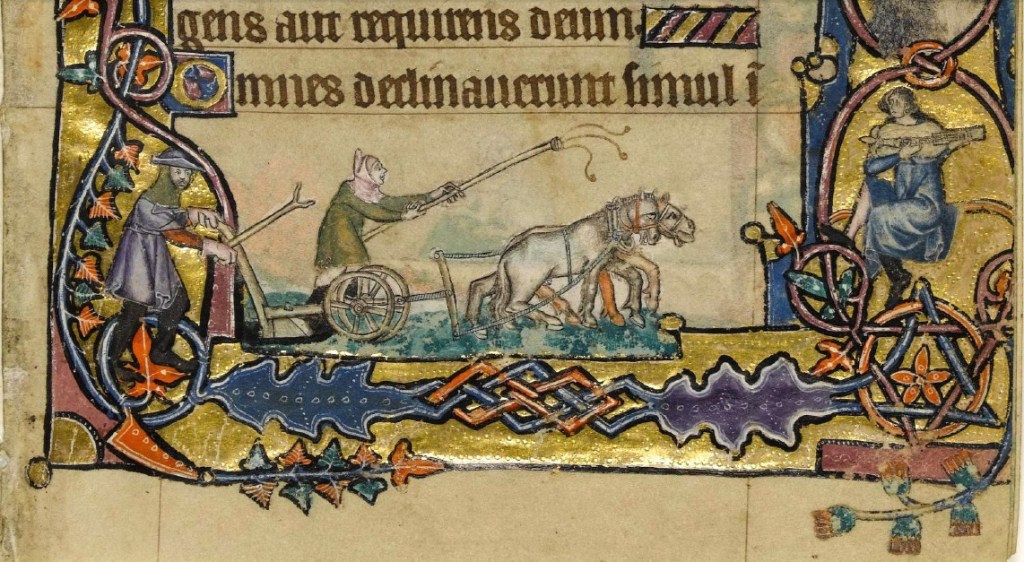
Pirenne’s theory is sound and persuasive, but it seems to rest too heavily on the shoulders of the merchant class and the revitalization of trade. He doesn’t appear to seriously take other factors into account that may have also contributed to the burgeoning urban life throughout the later stages of Medieval Europe. Improvements in agriculture such as the clearing of new land, better ploughing techniques, and use of crop rotation helped create new wealth. It is also believed that during the same period of advancement Pirenne attributes solely to merchant life, the climate in Europe was a bit milder, which would have led to an increase in agricultural output and in general population.4 It seems that there were a number of factors that ushered in and fostered the urban renewal of the Middle Ages, but the most significant factor has to be considered the rise of merchants and the middle class.
 dailey.news
You must be logged in to post a comment.