Robert the Bruce & Edward I: The Demise of English Authority in Scotland

With the death of Alexander III, the King of Scots, in March of 1286, Scotland entered a long period of turmoil. Alexander’s only living heir, an infant granddaughter known as Margaret, the “Maid of Norway,” died four years later on the journey to her future realm. With her death, Scotland no longer had an undisputed heir to the throne, and the country was left in a precarious position, on the brink of civil war.
More than a dozen different noblemen claimed the right to the Scottish crown, but in essence only two had a firm basis to support their claim – John Balliol, Lord of Galloway, and Robert Bruce, “the Competitor”. Both had bloodlines stretching back to the great King of Scots, David I, but because Balliol’s lineage traced back to David’s eldest granddaughter, while Bruce’s traced back to his second granddaughter, it was eventually ruled that Balliol had a stronger claim by reason of primogeniture. The overwhelming majority of the Scottish magnates supported the final judgment, made on November 17, 1292, but of course, the Bruce clan did not.1 They would not pay homage to Scotland’s new ruler, King John, and instead continued to pursue aspirations for the crown.

In the ensuing years, from the late thirteenth century into the early fourteenth, Robert the Competitor’s grandson, Robert the Bruce, Earl of Carrick, continued the family’s royal pursuit. Opportunistic, cunning, and resilient, the youngest Bruce would repeatedly switch sides in the ensuing conflict between Scotland and England, the First War of Scottish Independence. During a tense period of history rife with patriotism, Robert the Bruce was somewhat neutral, perhaps even indifferent, bearing no genuine devotion for the nation of Scotland, only the royal seat of Scotland. As his father and grandfather before him, Bruce held a deep disdain for many of his fellow Scottish nobles, resentful of the tremendous support they had given Balliol. unfettered by and shackling sense of loyalty, he was able to align himself with whatever situation seemed to best serve his purpose. Whether in the pocket of Edward I, or in defiance of him, through patience – or murder – Bruce would take any steps necessary to procure the Scottish crown, finally doing so in 1306.
A month after Alexander III’s death, in April of 1286, the leading men of Scotland gathered at Scone to deliberate over the formation of a provisional government. The assembly of bishops, abbots, earls, and barons chose six men to govern Scotland temporarily. The ad hoc ensemble, known as the Guardians of Scotland, swore fealty and loyalty to young Margaret, vowing to maintain and protect her kingdom until she came of age.2 In addition to the appointment of the Guardians, the assembly at Scone dispatched an envoy to seek out the King of England, Edward I. Their land and people stood in a vulnerable position, facing an uncertain future, and the Scottish magnates hoped to solicit Edward’s protection and advice. Unfortunately, the English guidance they sought out would only create more trouble for Scotland in the end.
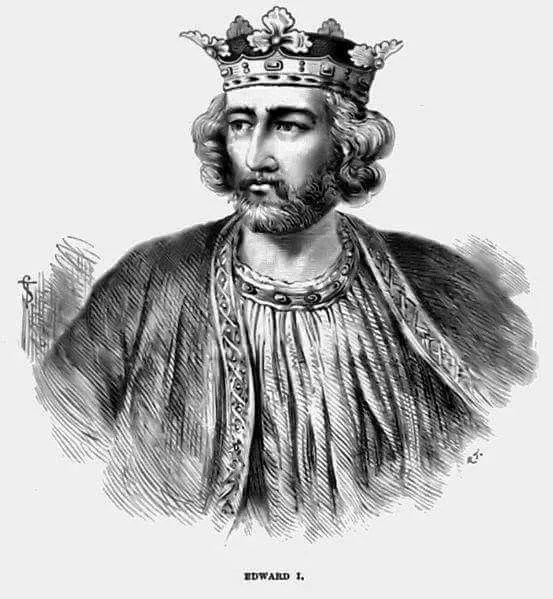
In order to get Edward’s intercession, the Guardians and all the Scottish magnates had to officially subordinate themselves to the English king, swearing fealty and affirming his overlordship. Even Balliol, as the newly appointed King of Scots, had to pay homage and formally, and publicly, demonstrate the authority of the English king. Though Balliol himself probably had no objection, for he may not have become king without Edward’s endorsement, the implications for the rest of Scotland were far more unsettling. The Scots did get Edward to accept a few key conditions, namely the observance of customary laws in Scotland, and the stipulation that the new king be appointed on Scottish lands, not English, but Edward essentially got what he wanted. As Barrow points out, “Despite the concessions which they had won, the Guardians had fatally compromised their independence.”3 The Scots had finally regained a king, but in the process, they had yielded their freedom.
After Robert the Competitor’s failed bid for the crown, he and his son refused to pay Balliol homage, wishing to keep hope alive for the youngest Bruce to achieve what they could not.4 To recognize Balliol’s sovereignty would be tantamount to recognizing the sovereignty of the entire Balliol clan, and the Bruces were not willing to give up their family’s cause so prematurely and peacefully. A great deal of land held by the elder Bruces in Scotland was handed down to young Robert who, along with his father, maintained allegiance to Edward I. In essence, Edward had become de facto ruler of Scotland with Balliol’s appointment, and it was in the Bruces best interests to remain in his favor. At this time, it was clear Bruce wouldn’t gain the crown through Scottish support, so he focused his energy on strengthening ties with England.
Though still holding lands, including Annandale and Carrick in the Southwest, the Bruces became something of a foreign presence in Scotland after Balliol became king.5 They were in clear support of Edward I, a man whom most Scots resented and were quickly beginning to hate. Not long after Balliol became king, Edward I started imposing his will, undermining Balliol’s authority and Scotland’s autonomy.6 Edward overturned a case decided by the Scottish Parliament in early 1293, and coerced Balliol into officially releasing him from any binding agreements made during Scotland’s interregnum.7 Barow contends that Edward viewed Scotland in the same light in which he viewed Aquitaine, his duchy in France; a resource to be utilized for the benefit of Scotland.8 To be associated with such an unpopular figure couldn’t have helped Robert the Bruce’s image in Scotland, but that was of no importance to him. By maintaining his allegiance to England, Bruce hoped to expand Edward’s trust and confidence in him, and eventually get his backing in the Bruces claim to power. In a few short years, Robert the Bruce would get a perfect opportunity to demonstrate his loyalty.
By the summer of 1295, Edward I’s overbearing attitude as “Lord Paramount of Scotland” had pushed the Scots to their limit. Now at war with Philip IV of France, Edward called for military support overseas, summoning a host of Scottish earls and barons, including King John himself. John had proven himself an incompetent leader by this point, incapable of standing up to Edward and his growing demands, and in July of 1295, he was essentially replaced by a council of twelve men, comparable to the Guardians, who set out to end the English manipulation of Scotland. The time was right for Scotland to assert its independence: not only was Edward at war with France but he was still busy putting down a rebellion in Wales.9 Within a few short months, the Scottish council would come to an agreement with Philip IV, ratifying a treaty with France, which, in effect, was a declaration of war on England.10
No one could have been more delighted with Balliol’s failure as king than Robert the Bruce and his father. When the council of twelve took over for Balliol and called all Scottish nobles to war against Edward I, Bruce must have been tempted to join the cause, but still bitter that Balliol had been made king over his grandfather, he decided to remain loyal to Edward I. More significant than any resentment he may have felt towards the Scottish nobles, Bruce’s decision was just as likely influenced by his belief that England would come out on top in the conflict. This was the opportunity he had been waiting for, a chance to prove his loyalty to Edward, now directly contrasted with the betrayal and ineptitude of Balliol. English support for Balliol had backfired, and all the while Robert the Bruce continued to support Edward, despite Edward’s snub of his grandfather.
Because they refused to answer the summons of the Scottish council, Scottish forces seized the Bruces lands in Annandale and Carrick, proceeding to use them as a base for attacks on England.11 Bruce was now officially in opposition to Scotland, and in October of 1295, Edward I placed Bruce’s father in control of Carlisle Castle, situated near the Scottish border in Northwest England, just opposite the Bruce lands in Annandale. When war broke out towards the end of March 1296, the Bruces successfully defended Carlisle against a Scottish attack as English troops began a devastating campaign up the Eastern Coast of Scotland. By August, Edward had brutally subdued the Scottish forces and pressed John Balliol to formally abdicate as king, tearing off his coat-of-arms, fully and publicly humiliating him.12 Balliol was then expatriated to England, along with nearly every Scottish noble of importance, including nearly all the Comyns, the largest and most powerful clan in Scotland.
Soon after the Scottish defeat, Bruce’s father approached Edward, asking that he be put on the throne to replace Balliol, to which Edward mockingly replied, “Have we nothing else to do but win kingdoms for you?”13 If unsure about Edward’s view of them before, these words must have made it clear to the Bruces that they were nothing more than vassals to English king. Through allegiance they had hoped to gain Edward’s support in a bid for the Scottish crown, but despite their continued adherence to him, Edward was proving to be no advocate.14 After years of service and loyalty, Bruce’s “spineless, colorless”15 father remained faithful to Edward I, but the future king was beginning to realize that if he wanted the Scottish crown, he would have to take it by force.16
With seemingly little to gain, and everything to lose, Robert the Bruce made his way north in June of 1297, joining the Scottish rebels gathered at Irvine.17 Departing from his family’s steadfast allegiance to Edward I, Bruce took the crucial first step in establishing himself as a patriot: “It was thus that the young Bruce… threw off his father’s tutelage and made the first independent political decision of his life.”18 Carrick and Annandale had only recently been restored to the Bruces following Edward I’s conquest the year before, but while his father may have been content to regain lost land and lordship, Robert the Bruce forwent such conservative logic.
With the absence of Balliol and most of the Comyn contingent, Bishop Wishart of Glasgow and James the Stewart assumed leadership in Scotland. Coordinators, more or less, for the nationalist cause, Wishart and the Stewart had been two of the original six Guardians in the interregnum between Alexander III’s death and John Balliol’s appointment. Both men were esteemed, national figures who carried a lot of weight in Scotland, but more significant for Bruce, they had both been strong supporters of his grandfather during the Great Cause.19 By aligning himself with Wishart, the Stewart, and the Scottish resistance, Bruce hoped to distance himself from Edward I, and in the void left by the Comyns, rebuild his reputation in Scotland.
At Irvine in June of 1297, responding to Wishart’s appeal, Robert the Bruce and a host of Scottish nobles assembled with the intent to unite their forces and drive out the English. Unfortunately, Bruce and the Scots could not agree on who would lead the collective effort, and as the nobles squabbled amongst each other for weeks, English forces quickly advanced on them. Seeing no safety in a militia divided against itself, many of the Scottish leaders, including Robert the Bruce, backed down and paid homage to Edward I in exchange for their exemption in fighting overseas. It was another blackeye for the nobility of Scotland and surely a very discouraging moment for Robert the Bruce, but despite this inauspicious beginning, Robert the Bruce was now a component of the Scottish resistance.

Following the capitulation at Irvine on July 7,1297, initiative in the Scottish resistance briefly shifted from the floundering nobility to the seething lower classes.20 With a series of successes culminating in the momentous victory over English forces at Stirling Bridge in September, William Wallace exploded onto the scene in 1297, inspiring nobles and peasants alike as he took command of the Scottish resistance. In the wake of his triumph over a substantial English army, Wallace was appointed sole Guardian of Scotland in early 1298, a staggering achievement for the son of a minor landowner in such a conservative and traditionalist land.21 Wallace’s meteoric rise to the Guardianship would quickly plateau and plummet, however, when his army was destroyed at Falkirk on July 22, 1298. Soon after this defeat, he would step down from the Guardianship, succeeded by none other than Robert the Bruce and Bruce’s hated rival, John “the Red” Comyn.
The hostility between the Bruce and Comyn clans was no secret in the realm of Scotland, but nonetheless, before December 1298, Robert the Bruce and John Comyn were appointed co-guardians.22 Comyn’s kinsman, John Balliol, had prevented Bruce’s grandfather from becoming king just six years earlier, and it had been Comyn’s father who seized the Bruce lands in Annandale, using them as a base to attack Carlisle, which the Bruce and his father had defended on behalf of Edward I. Both Bruce and Comyn struggled to control their resentment and enmity of each other, and though they were able to put aside their differences for a time, cooperation broke down by the end of 1299, leading to the appointment of Bishop William Lamberton as a third, neutral guardian.23 Despite the addition, Bruce would soon relinquish his Guardianship and renew his allegiance to Edward I. While his personal clash with Comyn was a factor in his decision, Bruce walked away for more compelling reasons.
When Bruce had joined the Scottish resistance in 1297, the Balliol and Comyn influence was on a steady decline in Scotland, if not nearly extinguished in his eyes.24 Of equal significance, Bruce had been happily married with a wife named Isobel whom he is said to have adored. In 1302, neither of these facts remained true for Robert the Bruce. Support for John Balliol was on the rise, many believing he would soon return to Scotland,25 and Isobel had died giving birth to their only child, Marjorie.26 For political and strategic reasons, Bruce once again paid homage to Edward I, wishing to marry Elizabeth de Burgh, daughter of the Earl of Ulster, a close friend and ally of the English king.27 Though he still aspired to be king and he still identified with the Scottish resistance, to earn Edward’s trust and prevent the Comyn or Balliol factions from gaining even more power, Bruce had to participate in various English campaigns in Scotland.28
Even before Bruce reverted to England, the situation for the Scots and the Scottish cause was becoming increasingly hopeless. As Duncan points out, “Whereas in 1295 the Scottish ‘community’ set aside King John’s authority to escape the logic of Edward’s overlordship, in 1300 they argued for his return apparently as a condition for accepting that overlordship.”29 The Scottish resistance was ready to fold, but they wanted their king back, feeling that at least Balliol would appoint Scots to Scottish posts, preserving their culture and traditions to a much greater extent than Edward cared to. Bishop Wishart and Robert the Bruce held similar cultural concerns as they began to orchestrate a final move for the crown and Scottish independence.
After forcing surrender in 1304, Edward I set about reorganizing Scotland as he had done eight years earlier. Compared to his operations in 1296, Edward showed a great deal of clemency the second time around, though William Wallace was not afforded the same mild terms as his fellow countrymen. Edward’s relentless pursuit of Wallace finally ended in his torture and a cruelly painful death, a personal act of revenge and a warning to Scotland. Meant to intimidate the Scots, the savage execution of Wallace only provoked them, especially Robert the Bruce who, after Wallace’s end, took matters into his own hands. In an impulsive act of passion, Robert the Bruce murdered John Comyn at Greyfriars Church in Dumfries on February 10, 1306.30 The two had been negotiating with the intent to make one man king with the other’s support, but in an ironic twist of events, Comyn seems to have reported the negotiations to Edward I in hopes of gaining his favor to the discredit of Bruce. Now squarely in opposition to England and Edward I, there was no going back for Bruce who seized the Scottish throne and was crowned at Scone six weeks later. After Comyn’s murder, Bruce spent several years fighting off Comyn’s kin and supporters, gradually gaining Scottish support. He would spend the next twenty years legitimizing his kingship, continually demanding England’s recognition, and finally securing it in 1327.
Apart from his personal resolve, perhaps more than anything else, Robert the Bruce owed his rise to power to Bishop Wishart, Bishop Lamberton, and the Scottish Church. Lamberton and Wishart helped organize and took part in Bruce’s coronation at Scone, legitimizing his declaration of power. Without the Scottish Church rallying behind him, Bruce could not have gained the support of the people and may not have been recognized as the undisputed leader of Scotland. Because they answered only to the Pope and refused to allow the English Church to subjugate them and the Scottish Church, Bishop Wishart and the clergy needed a crowned head in Scotland to protect them.
By leaving the safety and security he enjoyed with his allegiance to Edward I in 1296, Robert the Bruce was able to make some significant headway in attaining the Scottish crown. For nearly five years, between June 1297 and February 1302, Bruce audaciously opposed England in his quest to be enthroned, demonstrating a resolve and determination that his father never had. Most of the nobility in Scotland saw Bruce’s patriotism as a cloak concealing his deeper ambitions, but the fact remains that John Balliol and John Comyn were inadequate leaders. Had Robert the Bruce not been so passionate and determined to make good on his grandfather’s claim, the Scottish resistance, and possibly the whole of Scottish culture, may have faded under the heavy-handed Edward I. While Bruce’s ambitions initially seem self-serving, the integrity and uncompromising values of William Wallace proved to be a great influence as later seen in the wording of the Declaration of Arbroath: “As long as a hundred of us remain alive, we will never on any conditions be subjected to the lordship of the English. For we fight not for glory, nor riches, nor honours, but for freedom alone, which no good man gives up except with his life.”31 Seizing control, and demanding unified support, Robert the Bruce did what no other man in Scotland seemed capable of or willing to do. Though criticized by many for his lack of commitment to the national cause, without Bruce’s dogged persistence and resolve in gaining the crown, Scotland was doomed to exist under English dominion.
 dailey.news
You must be logged in to post a comment.